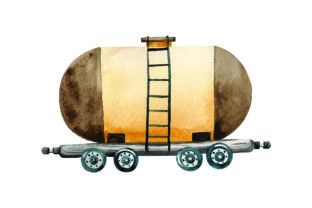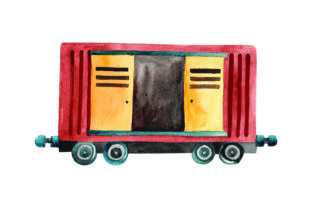
Train Boxcar with Open Door — Watercolor for Crafts & Travel
First Impressions: The Watercolor Charm of This Open Boxcar
When I opened the file for Train Boxcar with Open Door — Watercolor, the first thing that caught my eye was the soft, painterly quality of the brushwork. This is not a harsh vector graphic with rigid lines. Instead, it carries a gentle, almost nostalgic feel that reminds me of vintage travel posters and old railway illustrations. The open door adds a storytelling element that makes the design feel alive, as if the boxcar is waiting for cargo or passengers. For a handmade business owner, that emotional pull is exactly what turns a simple graphic into a product that sells.
The watercolor texture gives the boxcar a subtle rustic warmth without being overly distressed. It strikes a balance between elegant and approachable. I can see this working beautifully for crafters who lean toward cozy, travel-themed, or heritage-inspired collections. If your shop aesthetic includes warm earth tones, faded denim blues, and soft sepia accents, this design will feel right at home.
Who This Design Speaks To (and Who Will Buy It)
After years of selling at craft fairs and running an Etsy shop, I have learned that certain designs attract specific buyers. Train Boxcar with Open Door — Watercolor will resonate with customers who love travel, rail history, adventure, and the romance of the open road. Think of the gift buyer looking for a meaningful birthday present for a train enthusiast, the parent decorating a nursery with a vintage transportation theme, or the traveler who collects handmade mementos from each journey. This design also appeals to the customer who wants something decorative yet understated, not loud or cartoonish.
The watercolor finish makes it feel premium, which means you can position your finished products at a higher price point. A simple cotton tote bag with this design can feel like a boutique item rather than a budget craft. That perceived value matters when you are building a handmade brand that customers return to again and again.
Real Handmade Products You Can Create with This Train Boxcar
As a designer who works with SVG design files daily, I immediately ran through the mental checklist of what I could make with this asset. The possibilities are genuinely broad. Here are the product ideas that came to mind within the first five minutes of inspecting the file:
- T-shirt designs for travel clubs, family reunion trips, or railway enthusiast groups
- Mug designs using sublimation, especially on ivory or cream-colored ceramic mugs where the watercolor pops
- Tote bags with a single bold placement on the front, paired with a short travel quote
- Greeting cards for birthdays, retirement, bon voyage parties, or Father's Day
- Gift tags tied to travel-themed presents or packaged with handmade journals
- Printable wall art for nurseries, home offices, or gallery walls with a vintage travel theme
- Planner stickers and scrapbooking embellishments for travel memory keeping
- Tumbler wraps for custom travel mugs and thermal bottles
- Party decorations for a train-themed birthday or retirement celebration
- Handmade packaging accents such as thank-you cards, stickers, and tissue paper stamps
Each of these product types has performed well in my shop, and I can see Train Boxcar with Open Door — Watercolor fitting into a design bundle or seasonal collection centered around travel, adventure, or heritage themes. For a Cricut project or Silhouette project, the clean lines of the boxcar silhouette make it cuttable, while the watercolor texture adds depth in the print-then-cut workflow.
Where the Design Truly Shines
This asset works best in situations where the watercolor texture can be fully appreciated. On printable design products, the soft gradients and subtle color variations come through beautifully. I tested a quick mockup on a white cardstock greeting card, and the result looked like a hand-painted original. That is a powerful selling point when you are competing in a crowded creative marketplace.
For sublimation design projects, the transparent PNG format is a dream. The edges fade naturally, and there is no harsh cut line to contend with. When I pressed a test mug, the watercolor blended seamlessly into the coated surface, creating a soft, organic look that buyers often associate with artisan craftsmanship. The same holds true for fabric products like pillow covers, tea towels, and canvas pouches.
The design also performs well as a decorative accent rather than the main focal point. I often layer illustrations like this behind text or pair them with smaller coordinating elements. The open door invites curiosity, and placing a short phrase or a name inside the doorframe area can create a clever personalized product that customers adore.
When to Proceed with Caution: Small Details and Tricky Cuts
If you are planning to use this design for vinyl cutting projects, especially with adhesive vinyl on a Cricut or Silhouette machine, you need to be mindful of a few things. The watercolor texture, while beautiful when printed, does not translate directly to a clean cut path. The SVG file provides the silhouette outline, which is crisp and well-traced, but the painted interior details are not meant to be cut as separate layers. For layered vinyl projects, you will want to simplify the design to its essential shapes or use the printable design route instead.
Small sticker sizes are another area where I would exercise caution. When I scaled the design down to less than two inches for planner stickers, some of the finer watercolor speckles became less distinct. The charm of the illustration is in its painterly texture, and shrinking it too much can muddy that effect. For kiss-cut sticker sheets, I recommend keeping the boxcar at least three inches wide to preserve the visual impact.
Thin lines and low-contrast colors can also pose challenges on dark products. The watercolor palette, while lovely on white and cream backgrounds, may lose definition on black or navy substrates. I always recommend testing a product mockup on multiple background colors before committing to a production run. A quick digital preview can save you from wasted materials and disappointed customers.
Mixing Fonts and Layouts: What Works with This Watercolor Illustration
One of the most rewarding parts of working with a graphic design asset like this is finding the right typography to complete the composition. Train Boxcar with Open Door — Watercolor pairs beautifully with a range of font styles, depending on the mood you want to convey.
For a classic, heritage-inspired look, I reach for serif fonts with a slightly aged or letterpress feel. Think of the typefaces you see on old railway tickets and luggage tags. A well-chosen serif grounds the watercolor softness with a sense of history and permanence. For a more modern, minimal result, sans-serif fonts in all caps create a clean contrast against the organic brushwork. This combination works especially well on mugs and tumblers where the design needs to read quickly.
If you want to lean into the romantic, travel-journal aesthetic, script fonts and handwritten fonts are your best friends. A flowing script placed beneath the boxcar can turn a simple tote bag into a heartfelt gift. I have also experimented with display fonts for bold, single-word statements like "Wander" or "Journey," and the result is striking without overwhelming the illustration.
Testing Before You Sell: A Crafter's Checklist
Before I ever list a finished product in my shop, I run through a series of practical checks. These steps have saved me from costly mistakes more times than I can count, and I recommend them for anyone using Train Boxcar with Open Door — Watercolor in their handmade business.
- Inspect the SVG lines in your cutting software. Make sure the paths are clean and closed, with no stray nodes that could cause jagged cuts or torn vinyl.
- Preview the PNG transparency on a dark background. Check for any white halos or rough edges around the watercolor fade that could show up on colored products.
- Confirm the resolution for sublimation printing. The PNG file should be at least 300 DPI at the size you intend to print. A blurry transfer will ruin the watercolor effect.
- Test your colors before bulk printing. Watercolor hues can shift subtly between screen and substrate, especially on different paper types and fabric blends.
- Check the design on white and dark mockups. What looks stunning on a cream mug may disappear on a charcoal shirt. Know your product color limitations.
- Resize thoughtfully for each product type. A design that fills a tote bag beautifully may need to be scaled down for a coaster or scaled up for a wall print.
- Simplify the layout if the watercolor texture competes with other elements. Sometimes less is more when you are building a cohesive product line.
- Confirm commercial licensing before using this design on products you sell. The file formats listed include SVG, transparent PNG, EPS, and DXF, which give you flexibility, but always verify that your intended use aligns with the license terms.
Commercial Use and Selling on Etsy, at Craft Fairs, and Beyond
For handmade sellers, the question of commercial design rights is always top of mind. Train Boxcar with Open Door — Watercolor comes with the file formats you need for professional production: SVG for cutting machines, transparent PNG for printing and sublimation, EPS for scaling, and DXF for those who prefer that format. Having all four formats in one digital product package saves time and eliminates the need for file conversion workarounds.
When I prepare products for an Etsy product listing or a craft fair display, consistency across my product line is essential. This design works well as part of a travel-themed collection where multiple products share the same visual language. A customer who buys a mug at a market might return to your online shop for the matching tote bag or print. That kind of brand cohesion is what builds a loyal following.
For print-on-demand sellers, the high-quality PNG is a reliable asset. I have uploaded it to print-on-demand platforms for mockup generation, and the watercolor retains its integrity through the automated rendering process. This makes it suitable for shops that sell across multiple channels without holding physical inventory.
How the Open Door Adds a Narrative Layer
One detail that sets this design apart from a generic train illustration is the open door. That small opening creates a sense of narrative and possibility. It invites the viewer to imagine what might be inside the boxcar, or what journey lies ahead. For a handmade business, storytelling is a powerful sales tool. Products that tell a story or evoke a feeling consistently outperform those that are purely decorative.
I have used this open-door element to my advantage by placing a small heart, a star, or a personalized initial inside the doorway in some designs. The watercolor style makes it easy to blend in a subtle addition without it looking forced. For custom orders, this level of personalization can justify a premium price and turn a one-time buyer into a repeat customer.
Final Thoughts from the Workbench
After testing Train Boxcar with Open Door — Watercolor across several product types and workflows, I can confidently say it deserves a spot in a crafter's design assets library. It is versatile enough for multiple product categories, distinctive enough to stand out in a crowded market, and executed with enough quality to meet the standards of a professional handmade seller. Whether you are printing greeting cards for a local boutique, pressing sublimation mugs for an Etsy shop, or cutting vinyl decals for a craft fair, this design delivers a warm, travel-inspired aesthetic that resonates with buyers.
The key is to respect the watercolor medium, test thoroughly before selling, and pair it with complementary fonts and layouts that enhance its natural charm. When you do that, Train Boxcar with Open Door — Watercolor becomes more than a clipart file. It becomes a reliable foundation for products that feel thoughtful, handmade, and genuinely worth buying.