Cute Bunny Holding Carrot - Watercolor: An Embroidery Review
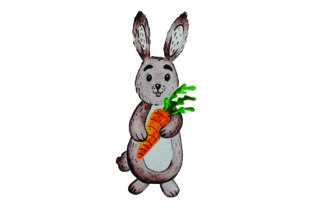
I opened the file folder and immediately felt a soft, storybook warmth. The Cute Bunny Holding Carrot - Watercolor design carries a gentle, hand-painted charm that feels less like a rigid vector graphic and more like a page from a children's book. The bunny's pose is sweet without being saccharine, the carrot adds just enough contrast, and the watercolor texture gives the entire piece a dreamy, organic quality. For anyone who stitches designs meant to feel personal and heartfelt, this one lands in exactly the right emotional register.
What struck me first was the softness of the edges. The watercolor style means blurred washes, slight color bleeds, and delicate tonal shifts. In a digital preview, that looks stunning. But as an embroidery designer, my brain immediately started translating those watercolor blooms into thread. Soft gradients are notoriously tricky to replicate with satin and fill stitches, so the real question becomes: does this design hold up when needle meets fabric?
The short answer is yes, with the right approach. The composition is simple enough to avoid becoming a muddy mess under thread. The bunny's silhouette is clear, the carrot sits prominently in the foreground, and the overall shape reads well even at a glance. That clarity is what saves a watercolor-style design from turning into an unrecognizable blur on a sweatshirt or tote bag. The art style is the star here, but the design's underlying structure is what makes it usable.
First Impressions and the Mood It Creates
This design feels like spring. Not the loud, graphic spring of neon eggs and patterned ribbons, but the quiet, tender version: pale washes of color, soft fur textures, a bunny that looks almost shy. The watercolor medium gives it a handmade, artisanal feel that resonates deeply with buyers who want products that feel personal rather than mass-produced. I could immediately picture it stitched onto a cream-colored onesie, a blush pink pillow cover, or a natural linen kitchen towel.
The carrot adds a playful focal point. Without it, the bunny might feel too passive. With it, the design tells a tiny story. That narrative quality matters when you are selling finished products. Customers connect with a story, even a simple one. A bunny holding a carrot feels like a moment caught in time, and that emotional hook is worth more than any technical perfection.
Where This Design Truly Belongs
After studying the lines and imagining the stitch path, I kept returning to the same conclusion: Cute Bunny Holding Carrot - Watercolor is a natural fit for baby and toddler items. The softness of the watercolor palette translates beautifully to nursery decor, baby blankets, bibs, and tiny t-shirts. Pastel thread choices would mirror the original art style, and the gentle subject matter suits a child's environment perfectly.
Beyond baby items, the design has strong potential for spring-themed handmade products. Think embroidered tote bags for farmers' market shoppers, apron pockets for home bakers, or throw pillow covers that brighten a reading nook. The design does not scream for attention, and that restraint is its strength. It adds a quiet, charming detail rather than dominating the entire product.
For Etsy sellers and small shop owners, this design fits neatly into seasonal product lines without feeling disposable. A bunny with a carrot can work for Easter, certainly, but it also reads as a general spring and garden motif. That versatility extends the selling window beyond a single holiday, which is a practical consideration for anyone managing inventory or made-to-order listings.
Real Project Scenario: The Custom Tote Bag Test
Last week, I prepared a batch of custom tote bags for a local boutique's spring collection. The client wanted something delicate, nature-inspired, and suitable for gifting. I tested several designs, and Cute Bunny Holding Carrot - Watercolor was one of the strongest contenders. I hooped a medium-weight cotton canvas with a cutaway stabilizer and chose a palette of soft taupe, pale peach, sage green, and a muted terracotta for the carrot.
The first stitch-out taught me something important. The watercolor texture, while beautiful in the source file, required careful digitizing to avoid dense, stiff areas. I adjusted the stitch angles to follow the implied brushstrokes, which helped preserve the organic flow. The bunny's face needed special attention. Too much detail in a small area, and the features would close up. Too little, and the expression would vanish. I settled on a light fill stitch for the cheeks and a simple running stitch for the eyes, which kept the face readable without overwhelming the softness.
The finished tote bag looked lovely. The design sat comfortably in the center of the bag front, about five inches tall, and the watercolor effect translated into a gentle, textured surface that invited touch. The boutique owner loved the samples and placed a reorder. Customers responded to the bunny's quiet charm, often picking up the bag and smiling before they even checked the price. That reaction is what you want from an embroidery design: an emotional connection before a purchasing decision.
Stitching Performance and Practical Notes
If you plan to stitch Cute Bunny Holding Carrot - Watercolor on apparel, fabric choice matters enormously. The watercolor style relies on subtle color transitions, and textured fabrics like terry cloth or heavily napped fleece will swallow those nuances. Smooth, stable fabrics like cotton twill, linen, poplin, and high-quality jersey with proper stabilizer will preserve the design's delicate character best.
Dark fabrics present a challenge. The soft, pale washes that define the watercolor look can lose contrast against a deep background. I recommend testing on a scrap of the exact fabric you intend to use, especially if you plan to stitch on navy, charcoal, or black. A light underlay or a slightly adjusted thread palette can help maintain visibility, but the design's soul is in its lightness, so lean into that rather than fighting it.
Small hoop sizes also demand caution. The bunny's face and the carrot details are the heart of the design. If you shrink the design too much, those features will fill in and lose definition. I would not go below a four-inch width for most applications, and even then, check the stitch density carefully. A test stitch on scrap fabric is not optional here. It is essential.
Thread and Texture Considerations
Choosing thread colors for a watercolor design is a delicate balance. You want to honor the original art's soft palette without ending up with a washed-out, low-contrast result. I found that using slightly more saturated versions of the watercolor tones works better than exact matches. For example, the bunny's fur might look pale gray in the digital file, but a thread with a touch more warmth prevents it from looking flat. The carrot benefits from a thread with a bit of orange depth, so it pops against the softer surroundings.
Stitch types also play a role. A mix of fill stitch for larger areas and satin stitch for outlines and small details creates a pleasing texture contrast. Running stitches can add subtle shading lines if the digitizing allows for it. The key is to avoid uniform, flat stitching across the entire design. The watercolor effect implies movement and variation, and your stitch choices should reflect that.
Commercial Use and Small Business Value
For craft business owners, the licensing question is critical. The product description mentions file formats including SVG, Transparent PNG, EPS, and DXF, which suggests the design is intended for both digital and physical product creation. Before selling finished items with this design, confirm the commercial license terms. Most reputable design sellers provide clear guidelines on whether the file can be used on products for sale, and some may require attribution or have quantity limits.
From a branding perspective, Cute Bunny Holding Carrot - Watercolor works well for shops with a soft, natural, or storybook aesthetic. It pairs beautifully with minimalist branding, kraft paper packaging, and handmade product photography. If your shop's visual identity leans toward rustic, gentle, or whimsical, this design will feel like a cohesive part of your collection rather than a one-off seasonal item.
For digital product sellers, the included file formats open up additional possibilities. The transparent PNG is ideal for printable mockups, digital scrapbooking elements, and sublimation designs. The SVG and EPS files allow for rescaling without quality loss, which is valuable for creating coordinating product sets across different sizes and mediums.
Giftability and Customer Appeal
Handmade products embroidered with this design have strong gift potential. A bunny holding a carrot feels universally endearing. It does not rely on trends or niche humor. It appeals across ages, from new parents receiving a personalized baby blanket to a friend who loves gardening and would treasure an embroidered apron. That broad appeal reduces the risk of unsold inventory and makes the design a reliable choice for craft fair tables and online listings alike.
When customers see the finished embroidery, the watercolor texture creates a sense of craftsmanship. The design looks like it took time and care, even if the actual stitch time is moderate. That perceived value helps justify higher price points for handmade items, especially when paired with quality materials and thoughtful presentation.
Potential Pitfalls and How to Avoid Them
Stretchy fabrics like t-shirt jersey or performance wear require extra attention. The design's soft edges can distort if the fabric shifts during stitching. Use a fusible stabilizer and consider a topping film for plush or looped fabrics. Hooping tension must be consistent, and a basting stitch around the design perimeter can provide extra security before the main stitching begins.
Curved surfaces like caps are tricky for this design because the watercolor details depend on even stitch placement. A cap's curved profile can cause slight distortion, especially near the edges of the design. If you want to embroider this on a hat, position it on the front panel where the curve is gentlest, and test thoroughly before committing to a production run.
Frequent washing also demands attention. The softer fill areas of a watercolor-style design can show wear over time if the thread tension is not dialed in correctly. Loose stitches may snag, and overly dense stitches can cause puckering after multiple washes. Test a finished sample through several wash and dry cycles to see how the design holds up before offering it to customers.
Final Design Judgment
Cute Bunny Holding Carrot - Watercolor earns its place in a serious embroidery designer's library. It is not a design for every project, but it excels in the projects where it belongs. The watercolor art style sets it apart from the countless flat, cartoonish bunny designs flooding the market. The composition is thoughtful, the mood is consistent, and the emotional payoff is real.
For baby items, spring gifts, nursery decor, and soft home goods, this design delivers warmth and charm. It requires a thoughtful approach to digitizing, fabric selection, and thread palette, but the results justify the effort. When a customer picks up a product embroidered with this bunny and pauses to smile, you have done your job as a maker. That quiet moment of connection is what good design is all about.
Before you add this file to your cart, check the listed formats against your workflow. The SVG, PNG, EPS, and DXF files cover a wide range of uses, from embroidery digitizing to print work and digital mockups. Verify the license terms, test the design on your preferred fabric and stabilizer combination, and keep a stitched sample on hand for customer photos. Thoughtful preparation will turn this sweet watercolor bunny into a reliable, profitable part of your creative business.